
Hair Conditioner VS Hair Mask: What Frizzy Hair Actually Needs
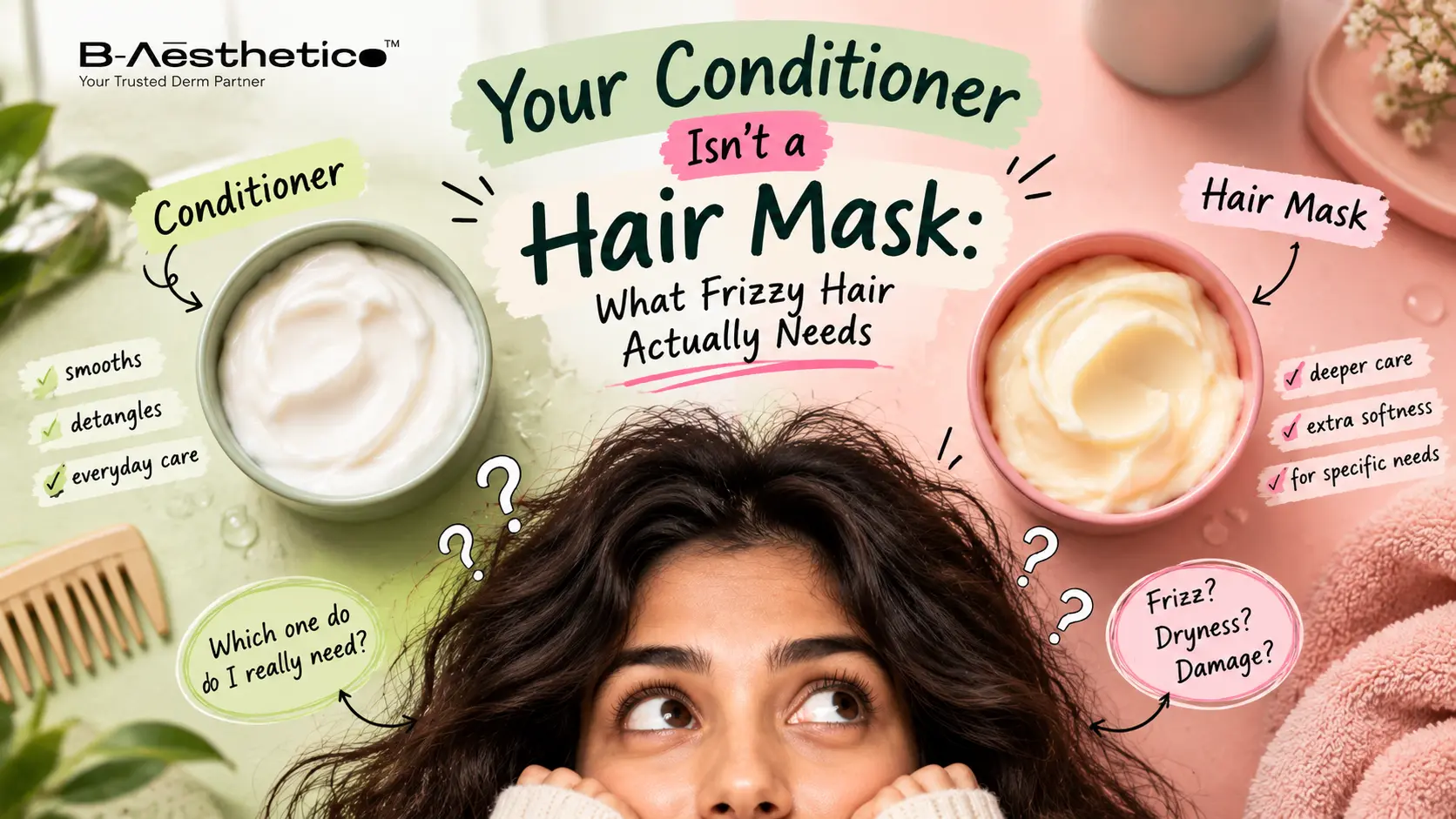
You wash your hair, apply conditioner, rinse it out and expect softer, smoother strands. But once your hair dries, it still feels rough, looks puffy or becomes frizzy the moment you step outside.
Sound familiar?
The difference between a hair mask and a conditioner could explain part of the problem. Conditioner helps smooth and detangle hair during regular washing, while a hair mask provides additional conditioning for specific hair needs. Neither is automatically better, and not everyone needs both.
The goal is understanding what your hair actually needs instead of adding another product simply because it promises shine. Our guide to the haircare products you actually need explains how to build a routine around your concerns rather than marketing trends.
Hair Mask vs Conditioner: What's the Difference?
Both products can soften hair, reduce friction and improve manageability. Their main differences lie in their formulations, intended use and application instructions.
Feature | Hair conditioner | Hair mask |
Main purpose | Smooths and detangles hair | Provides additional conditioning |
Best suited for | Regular maintenance | Hair needing extra softness or manageability |
Texture | Often lighter | Often richer, depending on the formula |
Typical use | Usually after shampooing | Periodically, following product directions |
Application time | Usually brief | Varies by formulation |
Is it essential? | Useful for most hair types | Optional if your routine already works |
A hair mask is not automatically more effective just because it is thicker. Some masks and conditioners contain similar conditioning ingredients. What matters is the formula, how you use it and how your hair responds.
What Does Conditioner Actually Do?
Think of conditioner as your hair's regular maintenance step.
The outer layer of a hair strand, called the cuticle, consists of overlapping protective structures. Washing, friction, heat styling and chemical treatments can leave hair more prone to tangling and roughness.
Conditioning ingredients help smooth the hair surface, reduce friction and make strands easier to comb. Depending on the formula, they can also improve softness, shine and manageability.
A conditioner is particularly useful if your hair is:
- Tangling after every wash.
- Dry or rough towards the ends.
- Long, curly or prone to breakage.
- Coloured or frequently heat-styled.
Apply conditioner according to its directions, concentrating on the lengths and ends when appropriate.
For regular cleansing, B-Aesthetico's Sulfate-Free Keratin Shampoo contains glycerin, panthenol and amodimethicone alongside its cleansing ingredients. Its benefits include moisture retention, shine and frizz management.
When Does Your Hair Need a Mask?
A hair mask is worth considering when your regular routine does not provide enough conditioning for your hair's needs.
Frequent straightening, colouring and chemical treatments can leave hair rougher and more difficult to manage. Naturally curly or coarse hair may also benefit from a richer conditioning formula, depending on its texture and condition.
A suitable mask can help improve softness, reduce tangling, make frizzy lengths easier to manage and improve the appearance of dry or damaged hair.
However, cosmetic conditioning does not permanently restore damaged hair to its original structure.
If your hair feels unusually rough after colouring or bleaching, read B-Aesthetico's guide to the effects of hair colour on hair and the right aftercare.
Does every frizzy hair type need a mask?
No. Frizz can be influenced by humidity, natural hair texture, surface damage and friction.
- Fine or easily weighed-down hair: Start with a lightweight conditioner. A rich mask may leave your hair flat or greasy.
- Thick, coarse or curly hair: A richer mask may improve manageability if ordinary conditioning is insufficient.
- Coloured or heat-styled hair: Additional conditioning may help, alongside reducing further heat and chemical damage.
- Oily scalp with dry ends: Prioritise appropriate scalp cleansing and condition the lengths according to their needs.
Humidity is another important factor, particularly in India's changing weather. Read How Humidity Affects Your Skin and Hair to understand why your hair may become puffier or harder to manage even when your routine has not changed.
For practical advice on changing your routine during the rainy season, try reading our guide to monsoon haircare, frizz and hair fall.
How Often Should You Use a Hair Mask?
There is no universal schedule that works for everyone.
Once a week can be a practical starting point for hair that needs additional conditioning, provided the product instructions support that frequency. Fine hair may need less frequent use, while particularly dry hair may respond differently depending on the formula.
Pay attention to the results. If your hair starts feeling heavy, coated or limp, reduce the amount or frequency. If it remains difficult to manage, reassess the formula and your overall routine rather than automatically applying more.
How to use a keratin hair mask
B-Aesthetico's Keratin Hair Mask contains hydrolyzed keratin, conditioning ingredients, argan oil, castor oil, sweet almond oil, biotin and soluble collagen.
We recommend users to wash and condition their hair, gently towel-dry it, apply the mask evenly from scalp to tips, leave it for 20–25 minutes and rinse thoroughly. Follow the product label, particularly if you have a sensitive or easily irritated scalp.
NOTE: Keratin in a cosmetic mask should not be confused with a professional keratin-smoothing treatment. A rinse-off mask can improve the feel and appearance of hair, but it does not promise permanent straightening or complete repair of damaged strands.
For a more detailed comparison, read B-Aesthetico's Keratin Hair Masks vs. Keratin Treatments.
If your concern is closer to salon-level smoothing than everyday conditioning, you can also explore our article on professional haircare treatments for salon-smooth results. A salon treatment and a home hair mask serve different purposes, so choose according to the result you are looking for.
Should You Use Both Conditioner and a Hair Mask?
Sometimes, but you do not necessarily need both during every wash.
On regular wash days:
- Shampoo your scalp and rinse.
- Apply conditioner to the lengths as directed.
- Rinse thoroughly.
On mask days:
- Shampoo and rinse.
- Follow the mask's specific application instructions.
- Rinse thoroughly and use conditioner only if the product directions and your hair's needs support it.
Some masks are intended to replace the conditioner for that wash, while others recommend using both. Follow the instructions for the particular product rather than assuming every mask works the same way.
If your routine already leaves your hair soft and manageable, there may be little reason to add another treatment. Our haircare essentials guide explores when additional products are useful and when they may simply duplicate what you already own.
Five Hair Mask Mistakes That Can Make Your Routine Less Effective
1. Applying too much product. More product does not necessarily mean more conditioning. Excess can weigh down strands and leave residue.
2. Using a mask at every wash without checking the directions. A richer formula may be unnecessary for hair that already feels soft and manageable.
3. Assuming frizz always means dryness. Humidity, friction and natural hair texture can also contribute. Adding more oils or creams may not solve every cause.
4. Leaving the mask on longer than recommended. Extra time is not guaranteed to produce better results. Follow the stated application time.
5. Expecting cosmetic products to stop medical hair loss. Conditioning products can help reduce friction and breakage, but they do not treat every cause of shedding, thinning or scalp disease.
For more advice on avoiding common routine errors, read Top 7 Hair Care Mistakes to Avoid for Healthy Hair.
What about scalp problems?
Hair-length conditioning and scalp care are not interchangeable. If your main concern is itching, persistent flakes or scalp discomfort, applying a richer mask may not address the underlying problem.
B-Aesthetico's Ultimate Guide to Scalp Care explains why scalp needs deserve separate attention.
The Detox Hair Mist is another great product in B-Aesthetico’s haircare range, positioned around scalp soothing and dandruff care. It’s easy to use and has been proven effective for many of our regulars!
Frequently Asked Questions (FAQs)
1. Can a hair mask replace conditioner?
Sometimes. It depends on the mask's formulation and directions. Some masks can replace conditioner for a particular wash, while others are designed to be used alongside it.
2. Is a hair mask better than a conditioner for frizzy hair?
Not necessarily. Conditioner is useful for regular smoothing and detangling. A mask may provide extra conditioning when hair remains dry, rough or difficult to manage. Humidity and hair texture can also contribute to frizz.
3. How often should I use a keratin hair mask?
Once a week can be a reasonable starting point for hair that needs extra conditioning, provided the product instructions support it. Adjust according to the formulation, hair texture and results.
4. Should I apply a hair mask to my scalp?
Not necessarily. Many masks are intended mainly for the lengths and ends, particularly when the scalp is oily. Follow the individual product's directions and consider scalp sensitivity. B-Aesthetico's scalp-care guide explains why scalp concerns may require a different approach.
5. Can a hair mask repair split ends permanently?
No. A conditioning mask may temporarily improve smoothness and make damaged ends look better, but it cannot permanently fuse split ends back together.
6. Can a hair mask stop hair fall?
A mask may help reduce breakage caused by tangling and friction, but breakage is different from hair shedding at the root. Persistent thinning or hair loss can have medical or nutritional causes that a cosmetic mask cannot address.
Explore More from B-Aesthetico
Choosing the right routine is about matching products to your hair, not collecting the largest number of bottles.
Explore the B-Aesthetico haircare range to compare the available shampoo, keratin hair mask and scalp-care mist. For more guidance, browse our haircare articles for practical advice on frizz, damaged lengths, scalp care and everyday maintenance.
Sources & Further Reading
- American Academy of Dermatology Association: Hair loss tips for managing fragile hair
- Indian Express: Hair mask or hair conditioner? Know the difference
- L'Oréal Professionnel: Hair masks, benefits and how to use them
- L'Oréal Paris: How to use a hair mask
Your conditioner is not failing simply because your hair is frizzy. Start with the basics, identify what your hair needs and add a mask when it offers a genuine benefit. Sometimes, better haircare means choosing the right extra step. Sometimes, it means keeping your routine simple.
Latest Posts


Related Articles
The Haircare Products You Need vs. The Ones Brands Want You to Buy
Do you really need every haircare product brands recommend? Discover which haircare products are worth buying,...

Effects of Hair Color on Your Hair: Types, Side Effects and Hair Care Tips
Does hair coloring damage your hair? Discover the effects of hair color, different types of hair...
Ayurvedic Dermatology: Is It Actually Effective? | B-Aesthetico
Is Ayurvedic skincare actually effective? This evidence-based guide to Ayurvedic dermatology explores turmeric, herbal ingredients, ubtans,...