
Tattoos and Your Skin: Effects, Risks, Aftercare & What You Should Know
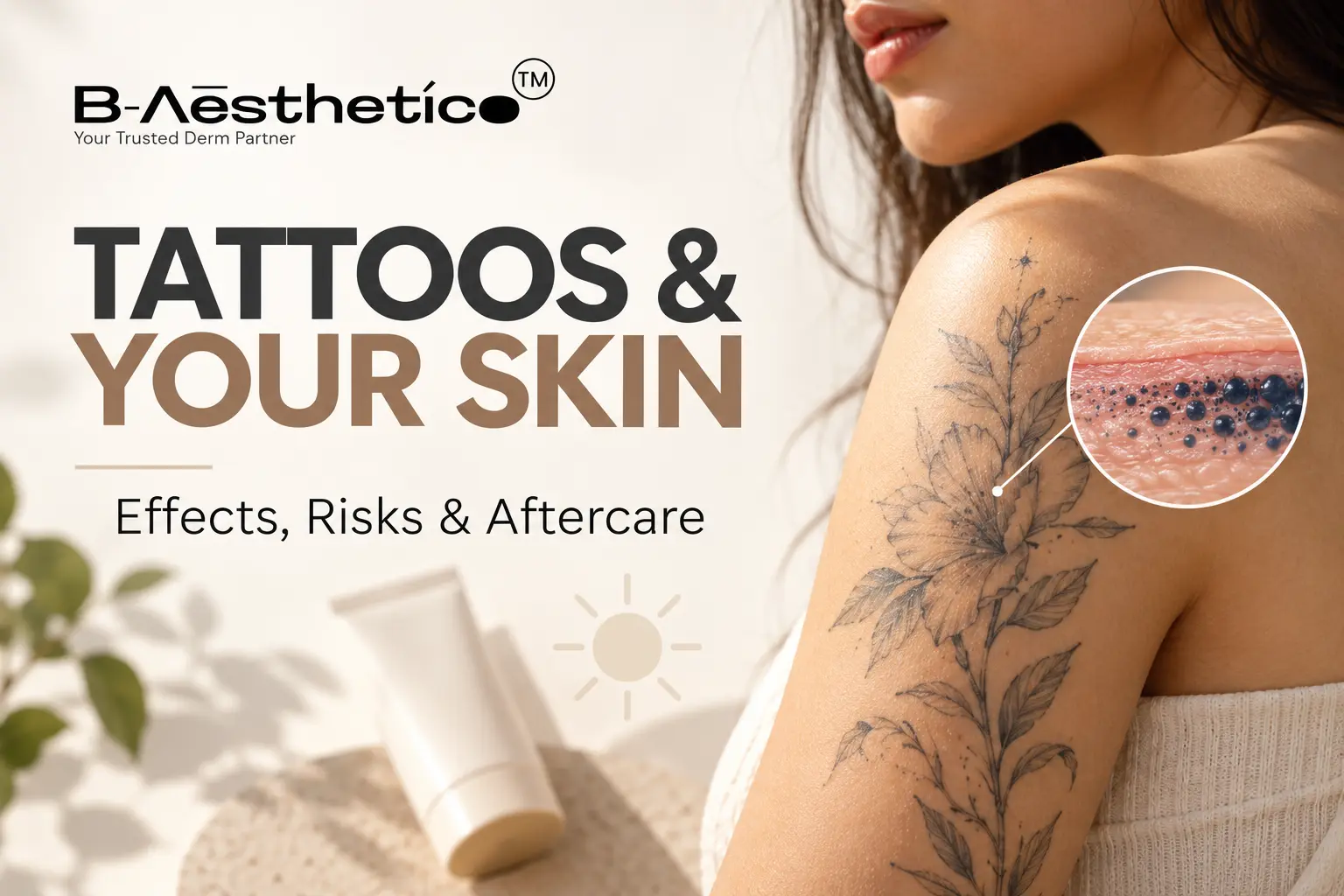
Tattoos have become a popular way to express personality, memories, beliefs and personal style. But while the finished design may look beautiful, a tattoo is still a procedure that changes your skin.
So, what actually happens to your skin when you get a tattoo? Can tattoos cause skin problems? What about tattoo allergies, infections, sun exposure or tattoo removal?
Let's break it down with our experts at team B-Aesthetico.
What Happens to Your Skin When You Get a Tattoo?
During tattooing, needles repeatedly puncture the skin and deposit ink into the dermis, the deeper layer of skin. This creates controlled skin trauma, which means redness, mild swelling, soreness and some peeling can be normal during the healing process.
The problem isn't necessarily the tattoo itself. The bigger concern is how your skin reacts, how the tattoo is performed and how you care for it afterward.
Using unsterile equipment, poor-quality ink or improper aftercare can increase the risk of complications such as infection and inflammation.
If you're interested in understanding your skin better, our guide to the basics of skincareis a useful place to start.
7 Possible Effects of Tattoos on Your Skin
1. Redness, Swelling and Irritation
A fresh tattoo can look red and feel tender for a few days. Some itching and peeling can also occur as the skin heals.
However, redness or pain that keeps getting worse rather than improving can be a warning sign of infection.
During the healing period, avoid experimenting with multiple skincare products. Your skin barrier needs time to recover, and keeping your skincare routine simple is usually the better approach.
2. Tattoo Allergy
Tattoo ink can sometimes trigger an allergic reaction. Interestingly, a reaction doesn't always happen immediately.
Some people develop an itchy rash, swelling, bumps or raised patches weeks, years or even decades after getting a tattoo. Red ink is frequently associated with tattoo allergies, although any colour can cause a reaction.
Persistent itching or irritation shouldn't simply be dismissed as "sensitive skin." If you're dealing with recurring skin irritation, understanding your skin type and skincare needscan help you make better product choices.
3. Infection
A tattoo creates an opening in the skin, which means bacteria can potentially enter.
Watch for symptoms such as:
- Increasing redness
- Worsening pain
- Pus or unusual discharge
- Painful bumps
- Open sores
- Fever or chills
These aren't typical signs of normal tattoo healing and shouldn't be ignored.
Good hygiene matters before, during and after getting a tattoo. The same principle applies to your everyday skincare routine: clean skin and appropriate products are the foundation of healthy-looking skin.
4. Sun Exposure Can Fade Tattoos
Your tattoo may be permanent, but its appearance isn't necessarily permanent.
UV exposure can gradually fade tattoo pigments. That's why sun protection is one of the most important long-term tattoo-care habits.
Once the tattoo has fully healed, broad-spectrum sunscreen with SPF 30 or higher can help protect exposed tattooed skin.
This is also where everyday sun protection becomes important for your overall skin health. If you're unsure about the difference between SPF, UVA and UVB protection, read What Really Is SPF?.
For daily protection, you can explore B-Aesthetico Skin Saver SPF 50+++.
5. Tattoos Can Make Skin Changes Harder to Notice
This is one of the less-discussed effects of tattoos.
Tattoo ink can make it harder to notice changes in moles or other spots underneath the ink. Dermatologists therefore recommend avoiding tattooing directly over moles and having suspicious spots assessed before getting a tattoo.
Importantly, there isn't enough evidence to say that tattoos themselves cause skin cancer.The concern is that tattoo ink can potentially make certain skin changes more difficult to identify.
If you already have concerns about pigmentation, tanning or uneven skin tone, you may also want to read our guide on how to remove tan effectively.
6. Keloids and Scarring
Some people naturally develop raised scars called keloids after skin injury.
Because tattooing repeatedly injures the skin, people who are prone to keloids may develop raised or excessive scarring around the tattoo.
If you've previously developed keloids, think carefully about getting a tattoo and understand your skin's tendency to scar before going ahead.
7. Rare MRI-Related Reactions
Having a tattoo doesn't mean you can't have an MRI.
However, rarely, tattooed skin can experience burning, swelling or discomfort during an MRI. Always tell the MRI technician that you have tattoos, particularly if you experience burning or stinging during the scan.
How to Take Care of Tattooed Skin
Good tattoo aftercare isn't complicated. The goal is to let the skin heal while minimizing irritation and unnecessary sun exposure.
During the healing period:
- Keep the tattoo clean according to your tattoo artist's instructions.
- Avoid unnecessary rubbing and scratching.
- Don't pick peeling skin or scabs.
- Avoid excessive sunlight.
- Don't apply random skincare products or harsh exfoliants to healing skin.
- Follow the aftercare instructions provided for your specific tattoo.
Once the tattoo has completely healed, regular moisturisation and sun protectioncan help keep the surrounding skin healthy and the tattoo looking better for longer.
If your skin tends to become dry or irritated, choosing the right moisturiser is just as important as choosing a sunscreen. You can explore the B-Aesthetico skincare collectionfor products designed around everyday skin concerns.
For additional skincare guidance, read our Ultimate Guide to Skin Care.
What About Tattoos During Summer?
Summer deserves special attention because increased heat, sweating and UV exposure can all make skin care more challenging.
Fresh tattoos should be protected from unnecessary sun exposure while they heal. Once healed, consistent sunscreen use becomes particularly important.
You can also read our guide on how humidity affects your skin and hairfor more tips on caring for your skin in hot and humid weather.
And if you're dealing with tanning after spending more time outdoors, our guide on how to remove tan effectivelycovers practical ways to approach uneven tanning.
Can You Remove a Tattoo?
Yes. If you eventually change your mind about a tattoo, professional tattoo removal is possible.
Laser tattoo removal is commonly used because lasers can target tattoo pigments while allowing the surrounding skin to recover. The number of sessions required depends on factors such as the tattoo's colour, size, depth, location and the type of ink used.
Avoid DIY tattoo-removal creams, acids or unverified home remedies. These can irritate or damage the skin and may leave permanent scarring.
If you're exploring professional aesthetic procedures, you can learn more about B-Aesthetico's aesthetic treatments.
Frequently Asked Questions (FAQs)
Do tattoos damage your skin?
Tattooing causes controlled injury to the skin because needles penetrate the dermis to deposit pigment. Most tattoos heal normally, but complications such as infection, allergic reactions and scarring can occur.
Can tattoo ink cause an allergic reaction?
Yes. Tattoo ink can cause allergic reactions, sometimes immediately and sometimes years after the tattoo was created. Persistent itching, swelling, bumps or a rash within a tattoo should not be ignored.
Do tattoos cause skin cancer?
There isn't enough evidence to establish that tattoos cause skin cancer. However, tattoo ink can make certain moles or skin changes more difficult to see, potentially delaying detection.
Can I put sunscreen on a new tattoo?
A fresh tattoo is healing skin, so sunscreen should not be treated like ordinary intact skin during the initial healing period. Follow your tattoo artist's aftercare instructions and wait until the tattoo has healed before applying sunscreen directly to it.
Once healed, SPF 30+ broad-spectrum protection can help protect exposed tattooed skin.
Learn more about sun protection in our guide to SPF and UV protection.
Does sunlight fade tattoos?
Yes. UV exposure can contribute to fading of tattoo pigments over time. Regular sun protection can help protect both your tattoo and the skin underneath it.
Can you get an MRI if you have a tattoo?
Yes. Tattoos do not normally prevent you from having an MRI. However, rarely, tattooed skin can react during an MRI, so it is best practice to inform the MRI technician about your tattoos and report any burning or stinging.
When should I worry about a tattoo?
Worsening redness or pain, pus, significant swelling, open sores, fever, chills, or a persistent rash around the tattoo can indicate a problem and shouldn't be ignored.
Take Care of the Skin Behind the Tattoo
A tattoo may be the part everyone notices, but healthy skin underneath it matters just as much.
Good hygiene, appropriate aftercare, moisturisation and consistent sun protection can help keep tattooed skin looking healthy long after the tattoo has healed.
Latest Posts







Related Articles
What Do Your Moles Really Mean?
Have you ever looked at a mole on your face or body and wondered, “Why do...
Ayurvedic Dermatology: Is It Actually Effective? | B-Aesthetico
Is Ayurvedic skincare actually effective? This evidence-based guide to Ayurvedic dermatology explores turmeric, herbal ingredients, ubtans,...

Men vs Women Skincare and Haircare: What’s Actually Different?
Men and women have real differences in skin and hair, but do they actually need different...