
Effects of Hair Color on Your Hair: Types, Side Effects and Hair Care Tips
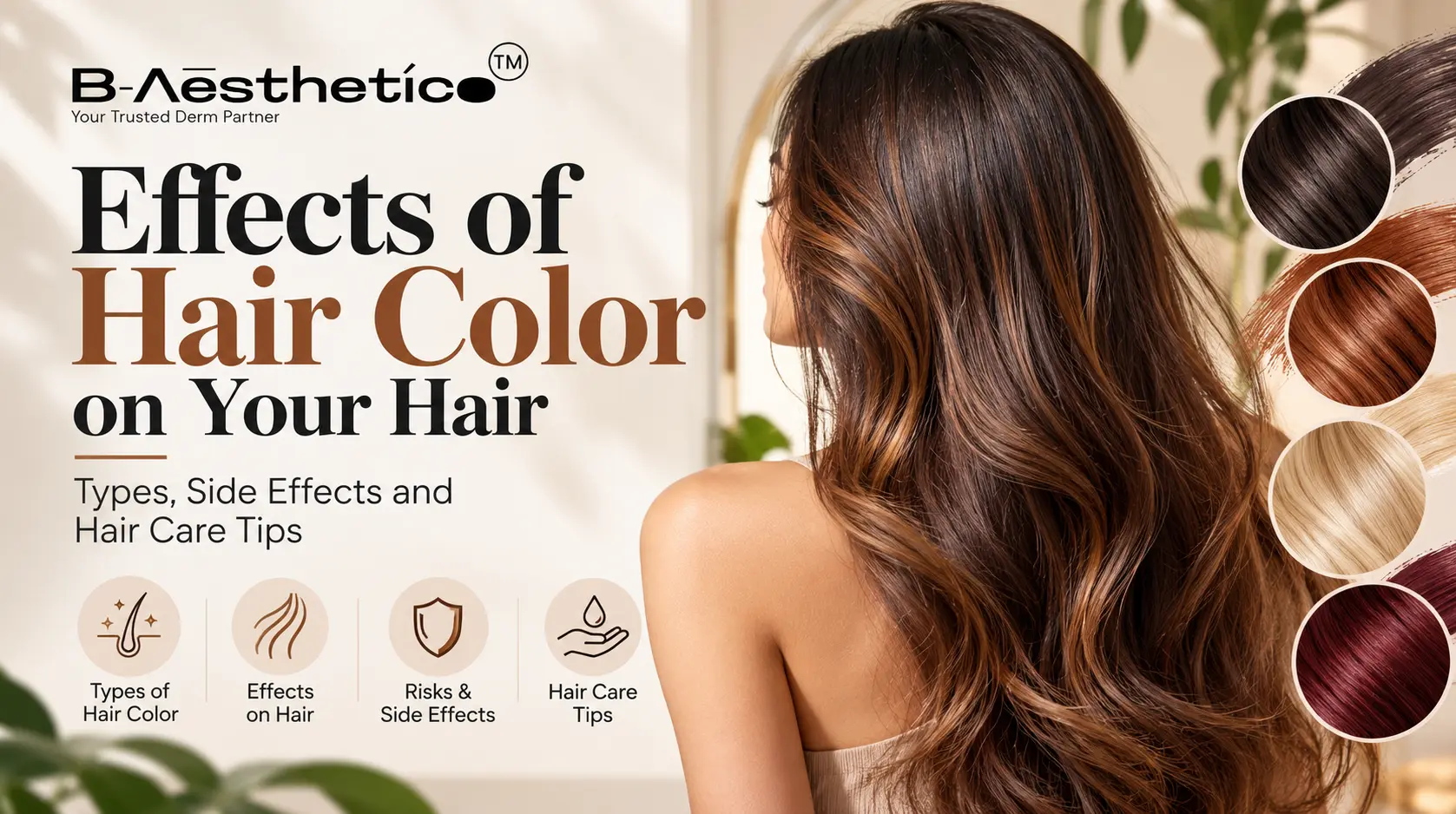
Hair coloring is a popular way to refresh your look, cover grey hair or experiment with a new style. But while the right shade can transform your appearance, frequent coloring and chemical treatments may affect your hair's strength, texture and shine.
So, does hair coloring damage your hair? The answer depends on the type of dye, the chemicals used, how frequently you color your hair and how well you care for it afterward.
At B-Aesthetico, we believe that beautiful hair starts with understanding its needs. Let's explore the different types of hair color, their effects and how to maintain healthy-looking hair with expert guidance from Team B-Aesthetico.
How Does Hair Color Affect Your Hair?
Hair dyes work differently depending on their formulation. Temporary colors mainly coat the hair surface, while permanent dyes use chemical processes to change the hair's natural pigment. Bleaching can be particularly damaging because it removes natural pigment from the hair shaft.
Some common effects of hair coloring include:
Dryness and roughness: Chemical treatments can affect the hair's protective outer layer, leaving strands feeling dry.
Breakage and split ends: Repeated coloring, especially bleaching, can weaken hair fibers.
Loss of shine: Changes to the hair's outer layer can make it look dull and feel less smooth.
Changes in texture: Colored hair may become more porous, tangled or difficult to manage.
Scalp irritation: Certain dye ingredients can cause itching, redness or allergic reactions.
Hair dye does not automatically cause hair loss from the roots. However, chemical damage can cause strands to break, making hair appear thinner. Scalp inflammation can also contribute to hair problems.
Your scalp deserves attention too. B-Aesthetico's guide to Scalp Care explains why scalp health matters when building a consistent hair care routine.
Types of Hair Color: Which One Should You Choose?
Different types of hair color offer different results, levels of commitment and potential for damage.
1. Temporary Hair Color
Temporary color coats the hair surface and generally washes out after one or a few shampoos. It is ideal for experimenting with shades without committing to a long-lasting change.
Best for: Special occasions, temporary color changes and trying new looks.
2. Semi-Permanent Hair Color
Semi-permanent color deposits pigment without the same permanent oxidative process used by conventional permanent dyes. It gradually fades with washing.
Best for: Refreshing existing color, adding vibrancy and experimenting with shades.
3. Demi-Permanent Hair Color
Demi-permanent color typically uses a developer to deposit pigment and usually lasts longer than semi-permanent color.
Best for: Enhancing natural shades, refreshing previously colored hair and blending some grey hair.
4. Permanent Hair Color
Permanent hair color uses an oxidative chemical process to change the hair's pigment. It is commonly used for longer-lasting color and grey coverage.
Best for: Lasting color transformations and more complete grey coverage.
Repeated applications, overlapping color on previously treated lengths and incorrect processing can increase damage.
5. Bleach, Highlights and Balayage
Bleaching removes natural pigment to create lighter shades. It is commonly used for blonde hair, highlights and balayage.
Best for: Noticeable lightening and multidimensional color.
Because bleaching can significantly weakenhair fibers, it requires careful application and appropriate aftercare.
6. Natural and Plant-Based Hair Color
Plant-based options, such as pure henna, can color hair without the same oxidative process used by conventional permanent dyes. However, formulations vary, so always check the ingredients.
Best for: People who prefer specific plant-based coloring options.
Natural does not automatically mean allergy-free or damage-free. Follow the manufacturer's instructions and perform the recommended allergy alert test.
How to Care for Colored Hair
The right hair care routine can help colored hair feel softer, look shinier and remain manageable for longer.
Choose a suitable shampoo - Frequent washing with a harsh cleanser may contribute to dryness or fading. The Sulfate Free Keratin Shampoo is a great option when choosing a cleansing product for your routine. Suitability depends on your scalp, hair texture and the complete formulation.
Give dry lengths extra care - Coloring and bleaching can leave hair feeling rough or difficult to manage. The Keratin Hair Mask is designed to condition hair, improve manageability and reduce frizz. Use it according to the product directions.
Limit heat styling - Frequent use of straighteners, curling irons and high-temperature blow-dryers can worsen dryness and breakage. Use moderate heat and avoid unnecessary styling.
Protect your hair from the sun - Prolonged UV exposure can contribute to color fading and hair damage. Consider wearing a hat or using a suitable UV-protective hair product.
Pay attention to your scalp - If dandruff is a concern, the Detox Hair Mist is a dermat-recommended product to explore for scalp-care purposes. Follow the usage instructions, particularly if your scalp is sensitive after a chemical treatment.
Environmental conditions matter as well. Indian summers and monsoon humidity can make frizz and hair manageability more challenging. Our guide to How Humidity Affects Your Skin & Hair explains how changing weather conditions affect your hair and scalp.
Common Hair Coloring Mistakes to Avoid
Even a suitable hair dye can cause problems when used incorrectly. Avoid repeatedly applying permanent color to previously colored lengths, bleaching hair too frequently or exceeding the recommended processing time.
Do not assume that ammonia-free, herbal or natural products are automatically harmless. Check the ingredients, follow the manufacturer's instructions and complete the recommended allergy alert test.
If your hair becomes unusually stretchy when wet, breaks easily or feels severely damaged after coloring, pause further chemical treatments and focus on gentle cleansing and conditioning.
Frequently Asked Questions (FAQs)
1. Does hair color damage your hair permanently?
Hair coloring can damage the hair shaft, particularly when permanent dyes or bleach are used repeatedly. The damaged portion cannot biologically repair itself, but conditioning products can improve its appearance and manageability while new hair grows.
2. Which type of hair color is least damaging?
Temporary colors and many semi-permanent formulations generally cause less structural damage than permanent oxidative dyes or bleach. The ingredients and your hair's condition still matter.
3. Does hair dye cause hair fall?
Hair dye more commonly causes hair shaft damage and breakage than direct hair loss from the follicle. Allergic reactions or scalp irritation can also contribute to hair problems. For more information on maintaining scalp health, read B-Aesthetico's Ultimate Scalp Care Guide.
4. How often should I color my hair?
There is no single interval suitable for everyone. It depends on the dye, your hair's condition and whether you are coloring roots, refreshing lengths or bleaching. Follow product instructions and avoid unnecessary repeated processing.
5. Is sulfate-free shampoo better for colored hair?
A sulfate-free shampoo may suit some people with colored hair, particularly those experiencing dryness or fading. However, the entire formulation matters, and sulfate-free products are not automatically better for everyone. You can explore the Sulfate Free Keratin Shampoo when choosing a shampoo suited to your hair care routine.
6. Can I color my hair if I have dandruff?
It depends on your scalp's condition. Avoid dyeing irritated, broken or inflamed skin. If dandruff is accompanied by significant redness or persistent itching, address the scalp problem before undergoing a chemical treatment.
7. How can I make my hair color last longer?
Use a suitable shampoo and conditioner, avoid excessive heat, protect your hair from prolonged sun exposure and limit unnecessary washing. Color longevity also depends on the dye type and your hair's porosity. During humid weather, these monsoon hair care tips can help you adapt your routine to changing hair care needs.
Latest Posts

Related Articles
Ayurvedic Dermatology: Is It Actually Effective? | B-Aesthetico
Is Ayurvedic skincare actually effective? This evidence-based guide to Ayurvedic dermatology explores turmeric, herbal ingredients, ubtans,...
Men vs Women Skincare and Haircare: What’s Actually Different?
Men and women have real differences in skin and hair, but do they actually need different...
How Humidity Affects Your Skin & Hair: The Complete Monsoon Guide
Why does your face suddenly look oilier in the monsoon? Why does your scalp feel greasy...